Industrial heritage in Hanoi – A multi-scalar assessment for adaptive reuse and innovative urban infrastructure
DOI:
https://doi.org/10.69143/2464-9309/1982026Keywords:
industrial heritage, adaptive reuse, inclusive infrastructure, urban regeneration, decision-support toolkitAbstract
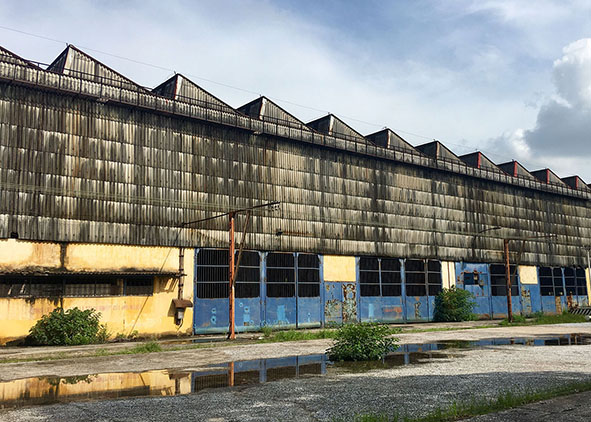
In Asian cities, rapid urbanisation has produced a paradox: these cities enter a ‘post-industrial’ phase while industrialisation remains ongoing. In Hanoi (Vietnam), for example, relocation policies for inner-city factories have driven demolition-led redevelopment, eroding industrial heritage and foreclosing opportunities for innovation. This paper examines repurposing industrial heritage as inclusive urban infrastructure contributing to SDG 9. Drawing on the EUNIC project ‘Repurposing Industrial Heritage’ (2021-2022), it applies a four-phase mixed-methods approach: spatial mapping of 95 facilities, morphological analysis, a community survey of 1,040 respondents, and comparison of 104 international cases. The research develops a Strategic Assessment Toolkit to support regeneration decisions calibrated to Hanoi’s institutional conditions.
Article info
Received: 10/03/2026; Revised: 16/04/2026; Accepted: 21/04/2026
Downloads
Article Metrics Graph
References
Andres, D. L. and Grésillon, D. B. (2011), “Brownfield lands in European cultural and creative cities – A comparative overview”, in L’Espace Géographique, vol. 40, issue 1, pp. 15-30. [Online] Available at: doi.org/10.3917/eg.401.0015 [Accessed 9 April 2026].
Arbab, P., and Alborzi, G. (2022), “Toward developing a sustainable regeneration framework for urban industrial heritage”, in Journal of Cultural Heritage Management and Sustainable Development, vol. 12, issue 3, pp. 263-274. [Online] Available at: doi.org/10.1108/JCHMSD-04-2020-0059 [Accessed 9 April 2026].
Baiani, S., Altamura, P., Turchetti, G. and Romano, G. (2024), “Transizione energetica e circolare del patrimonio industriale – Il caso dell'ex SNIA a Roma | Energy and circular transition of the industrial heritage – The Ex SNIA case in Rome”, in Agathón | International Journal of Architecture, Art and Design, vol. 15, pp. 190-203. [Online] Available at: doi.org/10.19229/2464-9309/15152024 [Accessed 9 April 2026].
Barles, S. (2010), “Society, energy and materials – The contribution of urban metabolism studies to sustainable urban development issues”, in Journal of Environmental Planning and Management, vol. 53, issue 4, pp. 439-455. [Online] Available at: doi.org/10.1080/09640561003703772 [Accessed 9 April 2026].
Berretta, T., Desideri, F. and Staltari, M. (2024), “Il progetto dello spazio pubblico, tra complessità e crisi ecologica – Da sfida a opportunità per la rigenerazione urbana | Public space project, between complexity and ecological crisis – From challenge to opportunity for urban regeneration”, in Agathón | International Journal of Architecture, Art and Design, vol. 16, pp. 74-87. [Online] Available at: doi.org/10.19229/2464-9309/1662024 [Accessed 9 April 2026].
Biasi, A., Riavis, V., Zamboni, I. and Cervesato, A. (2024), “Patrimonio architettonico urbano e cambiamento climatico – Un’occasione per affrontarne la complessità | Urban architectural heritage and climate change – An opportunity to address its complexity”, in Agathón | International Journal of Architecture, Art and Design, vol. 16, pp. 130-143. [Online] Available at: doi.org/10.19229/2464-9309/16112024 [Accessed 9 April 2026].
Cellucci, C., Revellini, R. and Tatano, V. (2025), “Quale genere di città – Rigenerazione urbana tra intersezionalità e inclusione | What kind of city – Urban regeneration between intersectionality and inclusion”, in Agathón | International Journal of Architecture, Art and Design, vol. 17, pp. 108-119. [Online] Available at: doi.org/10.69143/2464-9309/1762025 [Accessed 9 April 2026].
Çeltekligil, A. and Arabacıoğlu, F. P. (2025), “Adaptive Reuse in Industrial Heritage – A Bibliometric Review (2004-2024)”, in Proceedings of the International Conference of Contemporary Affairs in Architecture and Urbanism – ICCAUA, vol. 8, issue 1, pp. 850-862. [Online] Available at: doi.org/10.38027/ICCAUA2025EN0108 [Accessed 9 April 2026].
Creswell, J. W. and Plano Clark, V. L. (2018), Designing and Conducting Mixed Methods Research, SAGE Publications, Los Angeles.
Djebbour, I. and Biara, R. W. (2020), “The Challenge of Adaptive Reuse Towards the Sustainability of Heritage Buildings”, in International Journal of Conservation Science, vol. 11, issue 2, pp. 519-530. [Online] Available at: proquest.com/openview/2561d7343150de0baca02a9fe7463a3f/1?pq-origsite=gscholarandcbl=5327637 [Accessed 9 April 2026].
Fan, C. C. and Scott, A. J. (2003), “Industrial Agglomeration and Development – A Survey of Spatial Economic Issues in East Asia and a Statistical Analysis of Chinese Regions”, in Economic Geography, vol. 79, issue 3, pp. 295-319. [Online] Available at: jstor.org/stable/30032934 [Accessed 9 April 2026].
Fu, Y. and Yang, M. (2026), “The Rebirth of Industrial Heritage – How the Regeneration of Historical Spaces Impacts People’s Mental and Physical Health Through Restorative Perception”, in Buildings, vol. 16, issue 2, article 290, pp. 1-28. [Online] Available at: doi.org/10.3390/buildings16020290 [Accessed 9 April 2026].
Garda, E., Casale, T., D’Orazio, A., Di Mari, G., Franchini, C., Mattogno, C., Mele, C., Prencipe, M. and Renzulli, A. (2025), “Svelare l’invisibile – Progetti di ricerca per la parità di genere nel patrimonio costruito | Unveiling the invisible – Research Projects for Gender Equality in the Built Heritage”, in Agathón | International Journal of Architecture, Art and Design, vol. 17, pp. 168-179. [Online] Available at: doi.org/10.69143/2464-9309/17112025 [Accessed 9 April 2026].
Grésillon, B. (2011), “La reconversion d’un espace productif au cœur d’une métropole – L’exemple de la Friche de la Belle de Mai à Marseille”, in Rives méditerranéennes, vol. 38, pp. 87-101. [Online] Available at: doi.org/10.4000/rives.3977 [Accessed 9 April 2026].
Grodach, C. and Loukaitou-Sideris, A. (2007), “Cultural Development Strategies and Urban Revitalization – A survey of US cities”, in International Journal of Cultural Policy, vol. 13, issue 4, pp. 349-370. [Online] Available at: doi.org/10.1080/10286630701683235 [Accessed 9 April 2026].
Gürcanlı, G. E., Hartmann, T., Nurkaliyev, M. and Özgür, M. (2024), “Industrial heritage restoration / renovation projects and their societal impacts – Case of Gasholder Restoration Projects”, in Societal Impacts, vol. 3, article 100062, pp. 1-7. [Online] Available at: doi.org/10.1016/j.socimp.2024.100062 [Accessed 9 April 2026].
ICOMOS and TICCIH (2011), Joint ICOMOS-TICCIH Principles for the Conservation of Industrial Heritage Sites, Structures, Areas and Landscapes – The Dublin Principles. [Online] Available at: ticcih.org/wp-content/uploads/2013/10/GA2011_ICOMOS_TICCIH_joint_principles_ EN_FR_final_20120110.pdf [Accessed 9 April 2026].
Kennedy, C., Cuddihy, J. and Engel-Yan, J. (2007), “The Changing Metabolism of Cities”, in Journal of Industrial Ecology, vol. 11, issue 2, pp. 43-59. [Online] Available at: doi.org/10.1162/jie.2007.1107 [Accessed 9 April 2026].
Lanini, L., Sepe, M., Barsanti, E., Crudeli, A. and Marcheschi, C. (2025), “Abitare l'Università – Linee guida per nuovi poli e spazi pubblici per una vivibilità urbana sostenibile | Living the University – Guidelines for new campuses and public spaces for sustainable urban livability”, in Agathón | International Journal of Architecture, Art and Design, vol. 17, pp. 208-225. [Online] Available at: doi.org/10.69143/2464-9309/17142025 [Accessed 9 April 2026].
Larkin, B. (2013), “The Politics and Poetics of Infrastructure”, in Annual Review of Anthropology, vol. 42, pp. 327-343. [Online] Available at: doi.org/10.1146/annurev-anthro-092412-155522 [Accessed 9 April 2026].
Lee, S.-W., Song, D.-W. and Ducruet, C. (2008), “A tale of Asia’s world ports – The spatial evolution in global hub port cities”, in Geoforum, vol. 39, issue 1, pp. 372-385. [Online] Available at: doi.org/10.1016/j.geoforum.2007.07.010 [Accessed 9 April 2026].
López-Bravo, C., Lonardo, E. and Rosado, A. C. (2020), “Using or reusing? Parameter analysis of infrastructure refurbishment projects as touristic products”, in Pié, R., Rosa, C., Vilanova, J. M., Sabaté, J. and Porfido, E. (eds), TOURISCAPE2 – Transversal Tourism and Landscape, Conference Proceedings, Barcelona, Spain, November 5-6, 2020, UPCommons, Barcelona, pp. 651-555. [Online] Available at: re.public.polimi.it/bitstream/11311/1185609/1/Using%20or%20reusing %3F%20Parameter%20analysis%20of%20infrastructure%20refurbishment %20projects%20as%20touristic%20products.pdf [Accessed 9 April 2026].
Mehan, A. (2025), “Ripensare i paesaggi post-industriali attraverso la lente dello sviluppo sostenibile | Reimagining post-industrial landscapes through the lens of sustainable development”, in Agathón | International Journal of Architecture, Art and Design, vol. 17, pp. 120-129. [Online] Available at: doi.org/10.69143/2464-9309/1772025 [Accessed 9 April 2026].
Meng, F., Zhi, Y. and Pang, Y. (2023), “Assessment of the Adaptive Reuse Potentiality of Industrial Heritage Based on Improved Entropy TOPSIS Method from the Perspective of Urban Regeneration”, in Sustainability, vol. 15, issue 9, article 7735, pp. 1-23. [Online] Available at: doi.org/10.3390/su15097735 [Accessed 9 April 2026].
Moldoveanu, M. and Franc, V.-I. (2014), “Urban Regeneration and More Opportunities for Artistic Expression and Cultural Consumption”, in Procedia Economics and Finance, vol. 8, pp. 490-496. [Online] Available at: doi.org/10.1016/S2212-5671(14)00118-X [Accessed 9 April 2026].
Nguyen, T. H. (2025), “European Experiences with Repurposing of Industrial Facilities – Towards Potential Solutions for Hanoi, Vietnam”, in Vien, H. T., Pomeroy, G. M. and Ngoc Hieu, N. (eds), Proceedings of the 16th Asian Urbanization Conference – AUC2024 – Forgiving a Livable and Sustainable Urban Future, Binh Duong Province – Ho Chi Minh City, Vietnam, January 11-13, 2024, Springer, Singapore, pp. 51-58. [Online] Available at: doi.org/10.1007/978-981-96-9924-7_4 [Accessed 9 April 2026].
Plevoets, B. and Van Cleempoel, K. (2019), Adaptive Reuse of the Built Heritage – Concepts and Cases of an Emerging Discipline, Routledge, London.
Putilov, I. D. and Bazilevich, M. E. (2021), “Perspective Directions of Renovation of Industrial Enterprises on the Example of Khabarovsk City”, in IOP Conference Series | Materials Science and Engineering, vol. 1079, article 062007, pp. 1-6. [Online] Available at: doi.org/10.1088/1757-899X/1079/6/062007 [Accessed 9 April 2026].
Ricci, L., Poli, I. and Marino, M. (2025), “Welfare urbano e rigenerazione – Sostenibilità e inclusione sociale per il raggiungimento degli SDG | Urban welfare and regeneration – Sustainability and social inclusion for achieving the SDGs”, in Agathón | International Journal of Architecture, Art and Design, vol. 17, pp. 94-107. [Online] Available at: doi.org/10.69143/2464-9309/1752025 [Accessed 9 April 2026].
Romanelli, M. and Zbuchea, A. (2020), “Knowledge-based social innovation for cultural endeavours revitalising urban structures”, in International Journal of Knowledge-Based Development, vol. 11, issue 1, pp. 98-121. [Online] Available at: doi.org/10.1504/ijkbd.2020.106837 [Accessed 9 April 2026].
Sorbo, E., Moretto, T., Grandi, S. and Modena, G. (2025), “Identità culturali e sviluppo sostenibile – Un modello metodologico per l’Arsenale di Venezia | Cultural identity and sustainable development – A methodological model for the Venetian Arsenal”, in Agathón | International Journal of Architecture, Art and Design, vol. 17, pp. 130-145. [Online] Available at: doi.org/10.69143/2464-9309/1782025 [Accessed 9 April 2026].
Sun, M. and Chen, C. (2023), “Renovation of industrial heritage sites and sustainable urban regeneration in post-industrial Shanghai”, in Journal of Urban Affairs, vol. 45, issue 4, pp. 729-752. [Online] Available at: doi.org/10.1080/07352166.2021.1881404 [Accessed 9 April 2026].
Szopińska-Mularz, M., Prokop, A., Wikiera, M., Bukowy, W., Forsman, F. and Vikström, S. (2025), “Adaptive Reuse of Urban Structures as a Driver of Sustainable Development Goals – A Systematic Literature Review”, in Sustainability, vol. 17, issue 11, article 4963, pp. 1-28. [Online] Available at: doi.org/10.3390/su17114963 [Accessed 9 April 2026].
TICCIH (2003), The Nizhny Tagil Charter for the Industrial Heritage. [Online] Available at: ticcih.org/about/charter/ [Accessed 9 April 2026].
Tiesdell, S., Oc, T. and Heath, T. (2013), Revitalising Historic Urban Quarters, Taylor and Francis, Hoboken.
UNESCO (2023), Urban Heritage for Resilience – Consolidated Results of the Implementation of the 2011 Recommendation on the Historic Urban Landscape. [Online] Available at: doi.org/10.58337/CFZO9650 [Accessed 9 April 2026].
UNESCO (2011), Recommendation on the Historic Urban Landscape. [Online] Available at: whc.unesco.org/uploads/activities/documents/activity-638-98.pdf [Accessed 9 April 2026].
Yee Sing, T. and Yoh, S. (2016), “Rehabilitation Methods and Revitalization Strategies in the Old Inner-City Areas of Rapid Growth Cities in Asia – A comparison of four cities – Penang, Hanoi, Shanghai, and Tokyo”, in Urban and Regional Planning Review, vol. 3, pp. 1-20. [Online] Available at: doi.org/10.14398/urpr.3.1 [Accessed 9 April 2026].
Yin, R. K. (2018), Case Study Research and Applications, SAGE Publications, Thousand Oaks.
Yusuf, S. and Nabeshima, K. (2005), “Creative industries in East Asia”, in Cities, vol. 22, issue 2, pp. 109-122. [Online] Available at: doi.org/10.1016/j.cities.2005.01.001 [Accessed 9 April 2026].
Zhang, S. (2007), “Conservation and adaptive reuse of industrial heritage in Shanghai”, in Frontiers of Architecture and Civil Engineering in China, vol. 1, issue 4, pp. 481-490. [Online] Available at: doi.org/10.1007/s11709-007-0065-4 [Accessed 9 April 2026].
Downloads
Published
How to Cite
Issue
Section
Categories
License
Copyright (c) 2026 Thai Huyen Nguyen

This work is licensed under a Creative Commons Attribution 4.0 International License.
This Journal is published under Creative Commons Attribution Licence 4.0 (CC-BY).
License scheme | Legal code
This License allows anyone to:
Share: copy and redistribute the material in any medium or format.
Adapt: remix, transform, and build upon the material for any purpose, even commercially.
Under the following terms
Attribution: Users must give appropriate credit, provide a link to the license, and indicate if changes were made; users may do so in any reasonable manner, but not in any way that suggests the licensor endorses them or their use.
No additional restrictions: Users may not apply legal terms or technological measures that legally restrict others from doing anything the license permits.
Notices
Users do not have to comply with the license for elements of the material in the public domain or where your use is permitted by an applicable exception or limitation.
No warranties are given. The license may not give users all of the permissions necessary for their intended use. For example, other rights such as publicity, privacy, or moral rights may limit how you use the material.