Soft parts of living – Digital Atlas for the incremental regeneration of Public Residential Housing
DOI:
https://doi.org/10.69143/2464-9309/19132026Keywords:
public housing, digital atlas, adaptive regeneration, prefabrication, soft partsAbstract
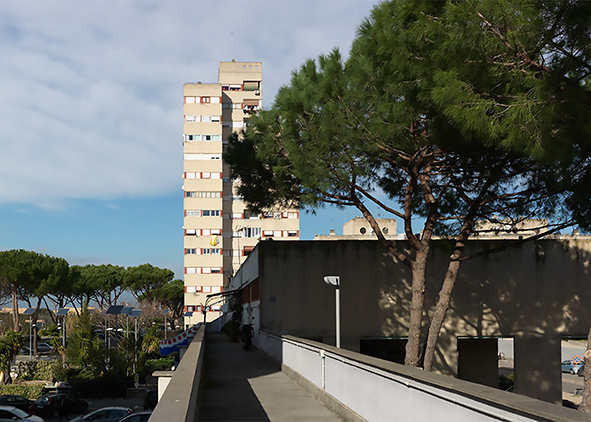
The contribution proposes a methodology for the incremental regeneration of Roman public housing, realised through industrialised processes and prefabricated components, understanding digital technologies as a knowledge infrastructure rather than a mere representative tool. Starting from doctoral research on the first PEEP in Rome, the study constructs a Digital Atlas, a decision matrix, and an operational abacus to make the critical issues, priorities, and compromises of transformation legible. The work shows how this built heritage lends itself to different transformations calibrated on a case-by-case basis, on the basis of constructional characteristics, housing needs, and management constraints. Regenerating does not mean preserving through inertia, nor adapting only in terms of performance, but restoring habitability through a project capable of distinguishing between environment, technology, and society.
Article info
Received: 11/03/2026; Revised: 21/04/2026; Accepted: 24/04/2026
Downloads
Article Metrics Graph
References
Bason, C., Conway, R., Hill, D. and Mazzucato, M. (2020), A New Bauhaus for a Green Deal. [Online] Available at: ucl.ac.uk/bartlett/public-purpose/publications/2021/jan/new-bauhaus-green-deal [Accessed 8 April 2026].
Battaino, C., Fossati, P. and Marconi, F. (2025), “Ripensare l’abitare – Progetto e architettura per un abitare flessibile e accessibile | Rethinking housing – Design and architecture for flexible and affordable living”, in Agathón | International Journal of Architecture, Art and Design, vol. 17, pp. 156-167. [Online] Available at: doi.org/10.69143/2464-9309/17102025 [Accessed 8 April 2026].
Block, M. and Ruggiero, R. (2023), “Housing in Transit – Quale transizione per l’edilizia residenziale pubblica industrializzata? | Housing in Transit – Which transition for the industrialised public housing?”, in Techne | Journal of Technology for Architecture and Environment, vol. 26, pp. 103-112. [Online] Available at: doi.org/10.36253/techne-14504 [Accessed 8 April 2026].
Block, M., Perriccioli, M. and Rossi-Schwarzenbeck, M. (2019), “Processi Digitali per la Riqualificazione dell’Edilizia Sociale in Plattenbau | Digital Processes for the Redevelopment of Social Housing in Plattenbau”, in Agathón | International Journal of Architecture, Art and Design, vol. 5, pp. 101-108. [Online] Available at: doi.org/10.19229/2464-9309/5112019 [Accessed 8 April 2026].
Bologna, A. (2021), “Verso una teoria della progettazione nell’era della crisi climatica”, in Archi | Rivista svizzera di architettura, ingegneria ed urbanistica, vol. 3, pp. 13-17. [Online] Available at: hdl.handle.net/11573/1552491 [Accessed 8 April 2026].
Boughton, J. (2023), A History of Council Housing in 100 Estates, RIBA Publishing, London.
Cangelli, E. (2025), “Rigenerazione urbana e SDG – Approcci progettuali per la riduzione delle disuguaglianze urbane | Urban regeneration and SDGs – Design approaches for reducing urban inequalities”, in Agathón | International Journal of Architecture, Art and Design, vol. 17, pp. 28-41. [Online] Available at: doi.org/10.69143/2464-9309/1712025 [Accessed 8 April 2026].
Cellamare, C. (ed.) (2016), Fuori raccordo – Abitare l’altra Roma, Donzelli, Roma.
Ciorra, P. and Marini, S. (eds) (2011), Re-cycle – Strategie per l’architettura, la città e il pianeta, Electa, Milano.
Dell’Acqua, F. and Sansò, C. (eds) (2022), Periferie e residenza pubblica in Italia – Gli anni 1945-2000 – Progetti, processi, idee di città, Maggioli Editore, Santarcangelo di Romagna.
Di Giorgio, G. (2011), L’alloggio ai tempi dell’edilizia sociale – Dall’Ina-Casa ai PEEP, Edilstampa, Roma.
Druot, F., Lacaton, A. and Vassal, J.-P. (2007), Plus – La vivienda colectiva – Territorio de excepción, Gustavo Gili, Barcelona.
Ginelli, E. and Castiglioni, L. (2012), “Perché valorizzare e riqualificare il patrimonio di edilizia residenziale pubblico | Why enhance and upgrade the public housing assets”, in Techne | Journal of Technology for Architecture and Environment, vol. 4, pp. 79-84. [Online] Available at: doi.org/10.13128/Techne-11497 [Accessed 8 April 2026].
Graf, F. (2014), Historie matérielle du bâti et projet de sauvegarde – Devenir de l’architecture moderne et contemporaine, Presses Polytechniques et Universitaires Romandes, Lausanne.
Graf, F. and Marino, G. (eds) (2016), Les dispositifs du confort dans l’architecture du XXe siècle – Connaissance et stratégies de sauvegarde | Building environment and interior comfort in 20th-century architecture – Understanding issues and developing conservation strategies, Presses Polytechniques et Universitaires Romandes, Lausanne.
Guidetti, E. (2025), The Potential of Form – How to Transform Existing Buildings in Post-functional Europe, Jovis, Berlin.
Habraken, N. J. (1999), Supports – An Alternative to Mass Housing, Routledge, London. [Online] Available at: doi.org/10.4324/9781003014713 [Accessed 8 April 2026].
Jessen, J. and Schneider, J. (2006), “La conversione – Un tema corrente”, in Schittich, C. (ed.), Ristrutturazioni – Riuso, completamento, nuova progettazione, Birkhäuser, München, pp. 10-21. [Online] Available at: api.pageplace.de/preview/DT0400.9783034615150_A20658119/preview-9783034615150_A20658119.pdf [Accessed 8 April 2026].
Lepratto, F. (2024), “Fine-Tuning the Intensity of Modifications to Revitalize Brutalist Mass Housing”, in The Plan Journal, vol. 9, issue 1, pp. 103-128. [Online] Available at: doi.org/10.15274/tpj.2024.09.01.7 [Accessed 8 April 2026].
Magnago Lampugnani, V. (2016), “Cinque proposte per costruire in tempi incerti | Five proposals for building in uncertain times”, in Domus, issue 1000, March, pp. 66-76. [Online] Available at: elearning.uniroma1.it/pluginfile.php/623965/mod_resource/content/1/ Lampugnani_Domus_1000/65-75_LAMPUGNANI.pdf [Accessed 8 April 2026].
Maldonado, T. (1978), “Roma – Le periferie”, in Casabella, issue 438, pp. 40-41.
Migotto, A. and Tattara, M. (eds) (2023), Contested Legacies – Critical Perspectives on Postwar Modern Housing, Leuven University Press, Leuven. [Online] Available at: doi.org/10.11116/9789461665140 [Accessed 8 April 2026].
Nelson, A. and Schneider, F. (eds) (2019), Housing for Degrowth – Principles, Models, Challenges and Opportunities, Routledge, London.
Ortega, L. (2017), The Total Designer – Authorship in the Architecture of the Post-digital Age, Actar Publisher, Barcelona.
Osello, A., Zucco, M., Iacono, E. and Del Giudice, M. (2024), “Logiche nascoste della complessità – Interfacce grafiche e algoritmi per il sistema edificio | Hidden logic of complexity – Graphical interfaces and algorithms for the building system”, in Agathón | International Journal of Architecture, Art and Design, vol. 16, pp. 202-211. [Online] Available at: doi.org/10.19229/2464-9309/16172024 [Accessed 8 April 2026].
Paganin, G., Talamo, C., Atta, N. and Tinelli, E. (2024), “Riuso di componenti edilizi – Sistema di valutazione a supporto delle decisioni negli interventi di ridistribuzione interna | Reuse of building components – Assessment system to support decisions in indoor re-layout interventions”, in Agathón | International Journal of Architecture, Art and Design, vol. 15, pp. 266-275. [Online] Available at: doi.org/10.19229/2464-9309/15212024 [Accessed 8 April 2026].
Paris, S. and Bianchi, R. (2018), Ri-abitare il moderno – Il progetto per il rinnovo dell’housing, Quodlibet, Macerata.
Petzet, M. and Heilmeyer, F. (eds) (2012), Reduce Reuse Recycle – Architecture as Resource – German Pavilion – 13th International Architecture Exhibition – Architecture Biennale Venice 2012, Hatje Cantz, Berlin.
Picon, A. (2010), Digital Culture in Architecture – An Introduction for the Design Professions, Birkhäuser, Basel.
Picon, A. (2022), “Digital technology and architecture – Towards a symmetrical approach”, in Technology | Architecture + Design, vol. 6, issue 1, pp. 10-14. [Online] Available at: doi.org/10.1080/24751448.2022.2040297 [Accessed 8 April 2026].
Plevoets, B. and Van Cleempoel, K. (2019), Adaptive Reuse of the Built Heritage – Concepts and Cases of an Emerging Discipline, Routledge, London.
Reichlin, B. and Pedretti, B. (eds) (2011), Riuso del patrimonio architettonico, Mendrisio Academy Press, Mendrisio.
Secchi, B. (2013), La città dei ricchi e la città dei poveri, Laterza, Bari.
Sennett, R. (2018), Costruire e abitare – Etica per la città, Feltrinelli, Milano.
Severino, E. (2021), Tecnica e architettura, Mimesis, Milano.
Downloads
Published
How to Cite
Issue
Section
Categories
License
Copyright (c) 2026 Spartaco Paris, Carlo Vannini

This work is licensed under a Creative Commons Attribution 4.0 International License.
This Journal is published under Creative Commons Attribution Licence 4.0 (CC-BY).
License scheme | Legal code
This License allows anyone to:
Share: copy and redistribute the material in any medium or format.
Adapt: remix, transform, and build upon the material for any purpose, even commercially.
Under the following terms
Attribution: Users must give appropriate credit, provide a link to the license, and indicate if changes were made; users may do so in any reasonable manner, but not in any way that suggests the licensor endorses them or their use.
No additional restrictions: Users may not apply legal terms or technological measures that legally restrict others from doing anything the license permits.
Notices
Users do not have to comply with the license for elements of the material in the public domain or where your use is permitted by an applicable exception or limitation.
No warranties are given. The license may not give users all of the permissions necessary for their intended use. For example, other rights such as publicity, privacy, or moral rights may limit how you use the material.