AGATHÓN
International Journal
of Architecture, Art and Design
ISSN (online) 2532-683X
ISSN (print) 2464-9309
About the Journal
EDITORIAL POLICIES
- Aims and Scope
- Section Policies
- Double-Blind Peer Review Process
- Digital Archiving
- Open Access Policy
- Article Processing Charges (APC)
- Publication Frequency
- Indexing and Abstracting
- Ethical Code
- Copyright Notice
- License for Published Contents
- License for Metadata
- Author Self-Archiving Policy
- Privacy Statement
- Aims and Scope
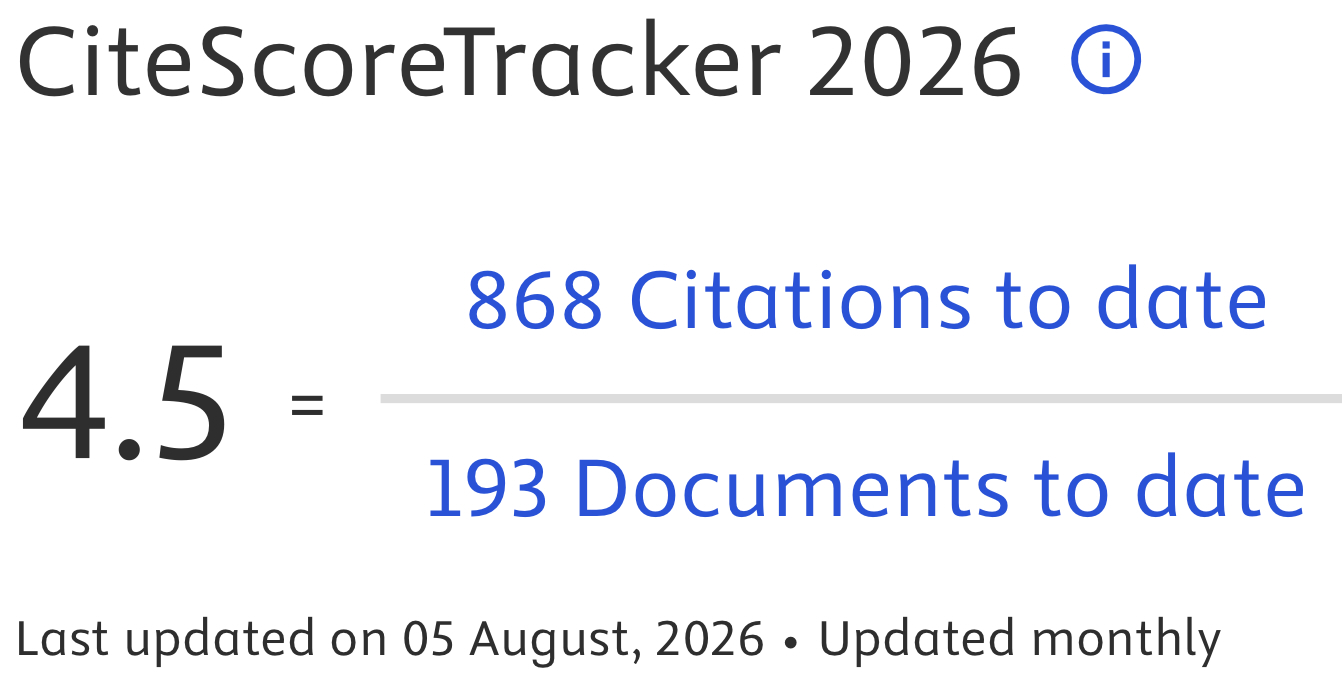
AGATHÓN is an Open Access International Scientific Journal of Architecture, Art and Design (indexed by SCOPUS and SCIMAGO), a half-year tool for information and critical training; it aims to contribute to the growth and dissemination of knowledge in the themes covered by Urban Planning, Architecture, Engineering, Art and (product and visual) Design. Therefore, the Journal represents a scientific place where Authors who have carried out original research can find an opportunity to spread their contributions. Each issue of the Journal includes essays and research works on a specific theme, unpublished works and not submitted for publication with other publishers.
Through its internal Board, the Journal promotes and monitors the double-blind peer review process to select articles, providing a mandatory form for reporting. The contributions are published in English and Italian to be placed in the widest range of the international scientific communities. The founding principles of the Journal are originality/innovation, the relevance of the investigated topic for the advancement of knowledge, the knowledge and ability to use literature, methodological rigour, the content clarity and presentation style, the impact on the scientific community, but also the easy accessibility and the wide diffusion of the articles; furthermore, the Journal is open to speculative empirical and descriptive research, about phenomena that present new characters, at least for certain important features.
- Section Policies
AGATHÓN adopts a Double-Blind Peer Review Process. Published articles are inserted in one of the sections
"Architecture" (architectural, urban, landscape and interior design, exhibition and museum design, representation technology, history, recovery and restoration)
"Art" (modern and contemporary)
"Design" (for industry, crafts and communication)
and are classified into the following categories: "Essays & Viewpoint", "Research & Experimentation", "Review Articles" or "Dialogue" (interview).
The articles of the Scientific Director and the (invited) Authors/Scholars who are renowned and/or experts in the subject will be published in the section "Focus" and will not be submitted to the double-blind peer-review process (in the first two issues a note declares this at the end of the single contribution).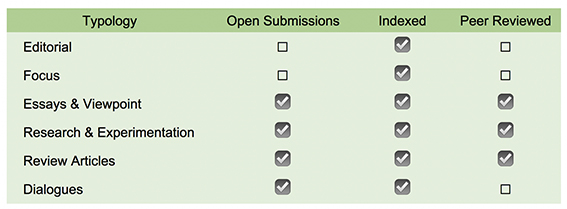
- Double-Blind Peer Review Process
Articles published in AGATHÓN are subjected preliminarily to peer and anonymous selection and evaluation procedures (the first on abstracts by the entire Editorial Board, the second on papers by the Editorial Board and members of the Editorial Board who are experts on the subject matter, the third, at the end, on the papers by the Reviewers), considering them an indispensable condition to verify on the one hand the quality, relevance and impact, originality/innovativeness of the contents, and on the other hand the clarity and correctness, methodological rigour, and completeness of the scientific texts with respect to international standards. Therefore, only articles that pass the entire editorial process are accepted for publication.
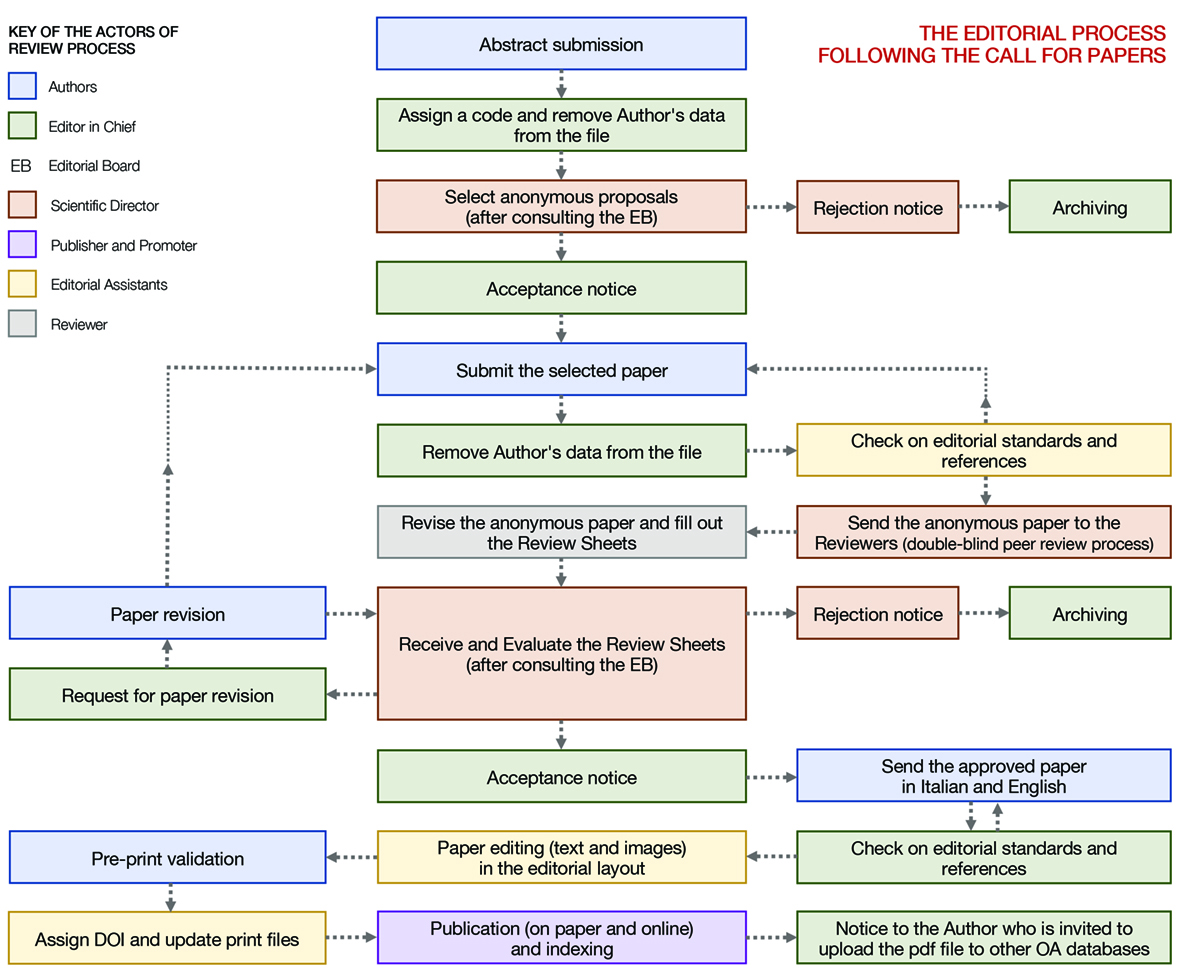
The review process (double-blind peer review) is intended – within AGATHÓN's editorial policy – as an opportunity for critical and constructive discussion among peers on the form, structure and content of contributions, so that authors can be aware of the quality already achieved and how to implement it by enhancing their research work before publication and dissemination of the results. The editorial process for each issue takes place over six months, from the launch of the Call for Papers to the publication of the Journal, and involves several stages for selecting and quality control of the contributions to be published.Therefore, AGATHÓN adopts a double-blind peer-review process, with the collaboration of two Referees who will fill out the Review Form. The following stages organise the editorial process:
- Authors who intend to publish their contributions are invited to download and read the review form before submitting an abstract (using only the .doc file downloadable at the webpage 'Information – For Authors and Submission') according to the Call for Papers; the contents of the contribution should consider essays, studies, researches and experimentations coherent with the subject of the Call.
- The Directorate and Editor in Chief eliminate specific identifying elements of the Authors and submit the abstracts anonymously to the Editorial Board for judgment.
Abstracts will be selected according to the following quality criteria: originality/innovation, relevance of the investigated topic for advancing knowledge, knowledge and ability to use literature, methodological rigour, content clarity and presentation style, and impact on the scientific community.
- The evaluation results are forwarded to the Authors according to the forms indicated in the Call. The Authors of accepted abstracts must submit the complete manuscript in Italian or English within the deadline stated in the Call; the referral begins after the correct and complete reception of the material to be submitted to the Referees.
- The evaluation procedure is performed through a “double-blind peer review”, during which the contribution to be examined is sent to two different Referees external to the Editorial Board and the Scientific Committee (among scholars and/or researchers of the Scientific/Academic Community). The Authors never know the names of the Referees who have examined their work, and vice versa. The Scientific Director identifies the Referees for each contribution submitted for their specific competence. In the contribution sent to the Referees, all references that may attribute the Authorship to the Author (any notes, biography, bibliographical references, etc.) are deleted. Referees at the same time receive an evaluation sheet of the contribution to be filled in, which includes: evaluation criteria, acceptance options (accepted, accepted with minor changes, to reconsider after major changes) or unsuitability to the publication, final evaluation, comments for Authors, and reasons for any refusal. If he deems it useful or necessary, the Scientific Director suggests further modifications or integrations to improve its quality and compliance with international standards.
- The paper must be approved unanimously by both Referees, both in the case of acceptance or refusal; in the event of a discrepancy between the two opinions, the paper is sent to a third Referee, whose evaluation will allow obtaining an overall decision (2 out of 3) which could be decisive for the decision on publication. Upon acceptance of the contribution, the Referees also provided comments and notes, offering guidance on how to improve the assessment subject.
- The Evaluation and Guidelines of the Referees are communicated to the Author or Authors who proceed to the final writing of the contribution according to the format requested by the Journal. The Scientific Director, in particular cases (for example, when the Author's revisions involve substantial structural and/or content changes), may decide to activate the double-blind peer review process again.
- The list of Referees who collaborate in the Journal will be inserted in the first issue of the following year in which the referral activities were carried out (without specifying the number of the Journal and for which articles) as a thank you for the collaboration provided and as a form of transparency with respect to the procedure adopted.
- Digital Archiving
We intend and expect to continue to publish our Journal for a very long time. If, due to some rare and unpredictable circumstances, we are forced to stop publishing the Journal, the manuscripts published in the Journal will remain online and accessible to the readers for at least 10 more years.
Our electronic content (website, manuscripts, etc.) is stored on three different sources. Content on the OJS platform is online and accessible to the Readers. A copy of the same content is kept as a backup on two other sources. In the event of a server failure, any other sources can be made available online, and the website will be accessible within 72 hours.
- Open Access Policy
AGATHÓN is an Open Access Journal, in the sense that it guarantees that no user, no university Library and no individual Reader will have to pay a pay-per-view fee to access the published contents; this on the principle that making research freely available to the public supports the widest global exchange of knowledge.
All articles are available to all users on the internet immediately upon publication.
AGATHÓN is published under a Creative Commons Attribution Licence 4.0 (CC-BY).
This License allows anyone to download, reuse, reprint, modify, distribute and/or copy the final version of the papers. The works must be properly attributed to its/their Author(s). It is unnecessary to ask further permission from either the Author(s) or the Journal Board, although you are kindly requested to inform the Journal Board of every reuse of the papers. Authors who publish on AGATHÓN maintain the copyrights.In order to 'Publisher copyright policies & self-archiving', the Board is working to register the Journal to RoMEO/SHERPA.
- Article Processing Charges (APC)
To cover the costs of running the Journal, AGATHÓN has decided to avail itself of a contribution from the Authors of the individual articles; they are, therefore, invited to contribute financially towards the editorial services (APC – Article Processing Charge) only if the paper is accepted for publication, after the peer-review process and any potential revision of the manuscript. The APC amounts to € 500.00 (since July 2026) ; in the case of papers signed by several Authors, the APC will be increased by € 50.00 for each Author in addition to the first. The APC must be paid according to the instructions that will be sent to the Authors in the e-mail of the acceptance of the article for publication. To encourage the publication of contributions by Authors with a primary affiliation in countries defined by the World Bank as "low-income and lower-middle-income economies", AGATHÓN will select a maximum of two authors to publish their contribution for free, subject to the positive outcome of the double-blind peer-review process.
- Indexing and Abstracting
AGATHÓN is indexed in the following databases:
- SCOPUS
- SCIMAGO
- ANVUR
- GOOGLE Scholar
- DOAJ – Directory of Open Access Journals
- BASE – Bielefeld Academic Search Engine
- OpenAIRE
- JURN
- WorldCat
- MIAR | Information Matrix for the Analysis Journals
- ULRICHSWEB
- ROAD – Directory of Open Access Scholarly Resources
- EZB – Elektronische Zeitschriftenbibliothek
- EBSCO
- ERIH PLUS
AGATHÓN is also indexed in Digital University Library in North America, South America, Europe, Asia, Australia and Africa.
- Ethical Code
AGATHÓN is a scientific journal that is based, in large part, on the guidelines and standards developed by the Committee on Publication Ethics – COPE. The relevant duties and expectations of Authors, Reviewers, and the Editorial Board of the journal are set out below. For further details, please visit Ethical oversight | COPE.
Duties of Directors and Editorial Board
Accordingly, the Journal takes all possible measures to prevent malpractice in the publication process and ensures best practices in publication ethics. All parties involved share and pursue the following Ethical Code: the Managing Director, Scientific Director, Scientific Committee, Editorial Board, Editorial Staff, Authors, and Reviewers.The Directors have ultimate responsibility for deciding whether a manuscript submitted to AGATHÓN should be published, and in doing so are guided by the Journal’s policies as determined by the Editorial Board and constrained by such legal requirements as shall then be in force regarding libel, copyright infringement, and plagiarism. The Directors may consult the Editor-in-Chief, other members of the Editorial Board, and Reviewers in making publication decisions. Manuscripts will be evaluated for their intellectual content without regard to the race, colour, gender, sexual orientation, religious beliefs, ethnic origin, citizenship, or political philosophy of the Author(s). They will not disclose any information about a manuscript under consideration to anyone other than the author(s), reviewers and potential reviewers, and in some instances the Editorial Board members, as appropriate. Additionally, the Directors will make every effort to ensure the integrity of the blind review process by not revealing the identity of the Author(s) of a manuscript to the reviewers of that manuscript, and vice versa. When evaluating a manuscript for publication, in addition to considering standard criteria pertaining to the rigour of the manuscript, the quality of its presentation, and its contribution to humanity’s stock of knowledge, the editors will also seek evidence that ethical harms have been minimised in the conduct of the reported research. They will question whether the benefits outweigh the harms in the particular study’s case.
Since AGATHÓN welcomes the submission of manuscripts from any country, it is necessary to recognise that laws and regulations regarding research ethics and ethical approval vary worldwide. As such, the Editorial Board may need to seek clarification with the Author(s) on this point and request that they supply a letter from the relevant institutional ethics committee or board that approved the research. The Editorial Board will be guided by COPE’s Guidelines for Retracting Articles when considering retracting, issuing an expression of concern about, and issuing corrections pertaining to articles that have been published in AGATHÓN. The Editorial Board is committed to working closely with research organisations and institutions in line with COPE’s advice on Cooperation between Research Institutions and Journals on Research Integrity Cases.
Duties of RefereesReviewers work for the journal on a volunteer basis. Given that most of these individuals are in full-time employment, their reviewing activities for AGATHÓN must, by necessity, not be their top priority. Reviewers are free to decline invitations to review particular manuscripts at their discretion, for example, if their current employment workload and/or other commitments make it prohibitive for them to complete a review in a timely fashion and to do justice to the task within the available timeframe. They should also not accept manuscript review assignments for which they feel unqualified.
Reviewers who have accepted manuscript assignments are normally expected to submit their reviews within three weeks. They should recuse themselves from the assignment if it becomes apparent to them at any stage that they do not possess the required expertise to perform the review, or that they may have a potential conflict of interest in performing the review (e.g., one resulting from competitive, collaborative, or other relationships or connections with any of the Authors, institutions, or companies associated with the manuscript). Privileged information or ideas obtained by reviewers through the peer review process must be kept confidential and not used for personal advantage. Any manuscripts received for review must be treated as confidential documents and must not be shown to or discussed with others except as authorised by the Scientific Director.
When conducting their reviews, Reviewers are asked to do so as objectively as possible, refraining from engaging in personal criticism of the Author(s). They are encouraged to express their views clearly, explaining and justifying all recommendations made. They should always attempt to provide detailed and constructive feedback to assist the Author(s) in improving their work, even if the manuscript is, in their opinion, not publishable. Reviewers should identify in their reviews relevant published work that has not been cited by the Author(s), together with any instances in which proper attribution of sources has not been provided. They should call to the Scientific Director’s attention any major resemblances between a manuscript under consideration and other published articles or papers of which they are aware, as well as any concerns they might have in relation to the ethical acceptability of the research reported in the manuscript.
Duties of AuthorsBy submitting a manuscript to AGATHÓN, the Author(s) warrant that the manuscript is their own, original work and that it has neither been published previously nor is currently being considered for publication elsewhere. They also warrant that the sources of any ideas and/or words in the manuscript that are not their own have been properly attributed through appropriate citations and/or quotes. An Author should not normally publish manuscripts describing essentially the same research in multiple journals or publication venues. Such redundant publication is generally considered unethical publishing behaviour; if discovered, it may result in a manuscript under consideration being rejected, or a published article being retracted.
Authors of manuscripts reporting on original research should present an accurate account of the work performed, accompanied by an objective discussion of its significance. Underlying data should be represented accurately in the manuscript. The manuscript should contain sufficient detail and references to permit others to replicate the work. The fabrication of results and the making of fraudulent or knowingly inaccurate statements constitute unethical behaviour and may be cause for rejection or retraction of a manuscript or published article. Where the manuscript reports on commercial software, hardware, or other products, Authors must include a declaration at the beginning of the manuscript in which they must either state that no conflict of interest exists or describe the nature of any potential conflict. All sources of financial support for the research should also be disclosed in the manuscript.
The Author(s) of a manuscript agree that if the manuscript is accepted for publication with AGATHÓN, the published article will be copyrighted using a Creative Commons “Attribution 4.0 International”. This license allows the Author(s) to retain the copyright and allows anyone to download, reuse, re-print, modify, distribute and/or copy the final version of the papers. The works must be properly attributed to their Authors. It is not necessary to ask further permissions from both the Author(s) and the Editorial Board, although you are kindly requested to inform the Editorial Board of every reuse of the papers. Authors are responsible for obtaining written permission to include any images or artwork for which they do not hold copyright in their articles, or to adapt any such images or artwork for inclusion in their articles. The copyright holder must be made explicitly aware that the image(s) or artwork will be made freely available online as part of the article under a Creative Commons “Attribution 4.0 International” license.
The Authors’ names should be listed on the article in order of their contribution to the article, and all Authors take responsibility for their own contributions. Only those individuals who have made a substantive contribution should be listed as Authors; those whose contributions are indirect or marginal (e.g., colleagues or supervisors who have reviewed drafts of the work or provided proofreading assistance, and heads of research institutes/centres/labs) should be named in an “Acknowledgments” section, to be placed immediately at the end of the article text. The corresponding Author must ensure that all appropriate co-Authors and no inappropriate co-Authors are included on the article, and that all listed co-Authors have seen and approved the final version of the article and agreed to its publication. Where an Author discovers a significant error or inaccuracy in an article of his/hers that has been published in AGATHÓN, he/she has an obligation to promptly notify the Editorial Board and cooperate with it to correct the article or retract it as appropriate.
- Copyright Notice
The Journal allows the Authors to hold the copyright without restrictions; however, when submitting their paper, they agree to the following License for Published Content.
- License for Published Contents
This Journal is published under Creative Commons Attribution Licence 4.0 (CC-BY).

License scheme | Legal code
This License allows anyone to:
Share: copy and redistribute the material in any medium or format.
Adapt: remix, transform, and build upon the material for any purpose, even commercially.
Under the following terms
Attribution: Users must give appropriate credit, provide a link to the License, and indicate if changes were made; users may do so in any reasonable manner but not in any way that suggests the licensor endorses them or their use.
No additional restrictions: Users may not apply legal terms or technological measures that legally restrict others from doing anything the license permits.
Notices
Users do not have to comply with the License for elements of the material in the public domain or where their use is permitted by an applicable exception or limitation.
No warranties are given. The License may not give users all the permissions necessary for their intended use. For example, other rights such as publicity, privacy, or moral rights may limit how you use the material. - License for Metadata
This Journal is published under the Creative Commons Attribution License (CC0 1.0 Universal) Public Domain Dedication
License scheme | Legal codeThis Journal publishes articles' metadata dedicated to the public domain by waiving all publishers’ rights to the work worldwide under copyright law, including all related and neighbouring rights, to the extent allowed by law. You can copy, modify, distribute and perform the work without permission, even for commercial purposes.
- Author Self-Archiving Policy
AGATHÓN encourages the Authors to upload their articles in Open Access and extended form – immediately after publication in the Journal – to databases, personal, institutional and scientific disclosure websites (such as academia.edu and researchgate.net), declaring that the contribution was published in the Journal.
- Privacy Statement
General Data Protection Regulation 2016/679
In light of GDPR 2016/679, LetteraVentidue Edizioni S.r.l. informs its members, users and authors (generically referred to as “users”) on:
- Purpose of the Treatment
The data the users provide will be used to promote, through informative e-mails, the various scientific-cultural activities referred to the AGATHÓN, | International Journal of Architecture Art and Design, and those related to the portal of scientific Journals NetScientificJournals.com
- Processing methods
The data may be processed by the Data Controller and by the people in charge (see point 5) under the direct authority of the first, exclusively to achieve the aims outlined in point 1. The processing of personal data (e.g. collection, recording, organization, storage, reading, processing, editing, selection, extraction, comparison, use, interconnection, blocking, communication, erasure and dissemination of the data) is performed manually and electronically. Data are stored in a paper archive and in an electronic database designated to fulfil the obligations mentioned above and purposes. The data in the aforementioned automated information system are processed using appropriate security measures to minimize the risk of destruction or loss, unauthorized access or processing that does not comply with the collection purposes. Furthermore, the data will be kept in the archives of the Data Controller for the time necessary for the purposes indicated above, as well as to fulfil the legal obligations imposed. The processed data must be strictly inherent and complete and not exceed the aims pursued.
- Provision of data
The provision of data for the purposes outlined in point 1 is necessary to access the services offered by LetteraVentidue Edizioni S.r.l.
- Communication and dissemination of data
The User's data will not be communicated or disclosed to third parties in Italy or abroad except for the purposes referred to in point 1. The User's data will not be sold, transferred, or shared with third parties that carry out activities of marketing and/or data processing; e-mails are sent from Gmail by the domain registered with phplist, whose privacy policies can be viewed respectively on the websites:
www.google.com/privacy_ads.html
www.phplist.com/knowledgebase/eu-gdpr/
The data that will help develop this platform (OJS) can be shared with its developer, Public Knowledge Project (PKP), in an anonymized and aggregate form, with appropriate exceptions on article metrics.- Data Controller
The owner of the processing of personal data is the CEO of LetteraVentidue Edizioni S.r.l.
- Rights of the interested party
The user can exercise, pursuant to articles 15 to 22 of EU Regulation no. 2016/679, the right to: a) request confirmation of the existence or otherwise of your personal data; b) obtain information about the purposes of the processing, the categories of personal data, the recipients or the categories of recipients to whom the personal data have been or will be communicated and, when possible, the storage period; c) obtain the correction and deletion of data; d) obtain the treatment limitation; e) obtain the portability of the data, that is, receive it from a data controller, in a structured format, commonly used and readable by an automatic device, and transmit it to another data controller without hindrance; f) object to the processing at any time and also in the case of processing for direct marketing purposes; g) oppose an automated decision-making process relating to natural persons, including profiling; h) ask the data controller to access personal data and to correct or delete them or limit the processing that concerns them or to oppose their treatment, in addition to the right to data portability; i) revoke the consent at any time without jeopardizing the lawfulness of the processing based on the consent given before the revocation; j) to lodge a complaint with a supervisory authority.
To exercise his rights, the user can request by e-mail to redazione@agathon.it